Rediscover Independence: Why a Sit-to-Stand Lift Transforms Daily Transfers
ManuelMLymon,
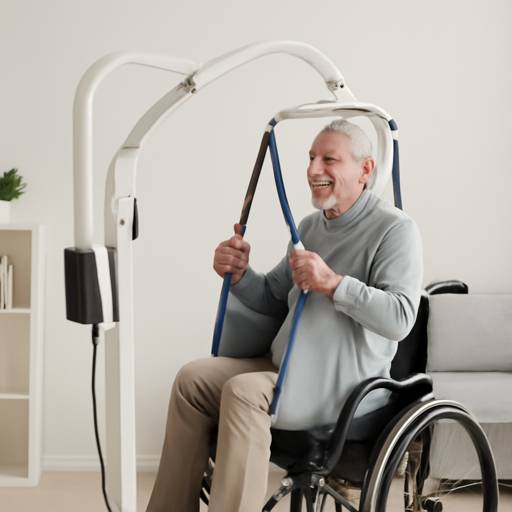
For individuals recovering from surgery, managing a progressive condition, or experiencing age-related weakness, the simple act of standing from a seated position can become a monumental challenge. Yet, the ability to stand is often the gateway to maintaining dignity and participating in daily life. This is where the sit-to-stand lift becomes an indispensable tool. Unlike full-body sling lifts that require total dependence, these devices are designed for patients who can bear some weight on their legs and possess upper body strength. They facilitate a natural standing motion, providing support where it is most needed: the lower back and hips. The market for these devices has expanded significantly, and finding a high-quality sit to stand lift for sale is a critical decision for both healthcare facilities and home caregivers. The investment is not merely in a piece of machinery; it is an investment in safety, autonomy, and the reduction of long-term injury risks for caregivers. These units bridge the gap between total dependence and independent mobility, making them a cornerstone of modern patient handling protocols. Their mechanical design mimics a kinesiological movement pattern, which helps maintain muscle tone and bone density over prolonged periods of use.
Understanding the Mechanics and Safety Features of Modern Standing Aids
The engineering behind a modern sit-to-stand lift is a sophisticated blend of biomechanics and material science. Most units feature a footplate that the patient positions themselves on, a padded knee brace that stabilizes the legs, and a harness that supports the torso or under the arms. The lift mechanism—whether manual, battery-powered, or hydraulic—raises the patient from a seated position to a near-standing posture. This allows the caregiver to pivot the patient to a wheelchair, commode, or bed safely. One of the most critical safety features to scrutinize is the stability of the base legs. High-quality models use wide, durable wheel bases that can be manually adjusted or powered open to clear furniture legs and bedframes. Additionally, emergency stop buttons and backup battery systems ensure that the device never leaves a patient stranded in a mid-transfer position. Modern units also integrate load sensors that prevent operation if the patient is significantly above the safe weight limit. The adjustability of the knee support is another key factor; it must accommodate different leg lengths and degrees of flexion to provide a comfortable, secure fit. When evaluating a sit to stand lift for sale, look for units with seamless, easy-to-clean upholstery to reduce the risk of infection, especially in multi-user environments like nursing homes. The braking systems on the casters are equally important, as they must lock reliably on various flooring types to prevent unintended rolling during the vertical lift phase. These mechanical details separate professional-grade equipment from basic consumer models.
The psychological impact of using these lifts cannot be overstated. A patient who requires a full-body lift often feels completely helpless. In contrast, a sit-to-stand lift requires active participation. The patient must engage their core and legs, which promotes circulation, reduces the risk of pressure injuries, and preserves a sense of agency. This active involvement is clinically significant; it helps prevent the muscle atrophy that often accelerates a patient’s decline. For caregivers, the benefit is primarily ergonomic. Standard manual transfers are responsible for a high percentage of back injuries among nurses and home health aides. A sit-to-stand lift eliminates the awkward, heavy lifting that causes lumbar strain. The device does the heavy work, allowing the caregiver to guide the movement with minimal physical exertion. Many advanced models now include digital weight scales integrated into the lift mechanism, allowing for simultaneous weighing of the patient during the transfer process. This is a valuable feature for home health monitoring, eliminating the need for a separate transfer to a scale. Choosing the right model requires a careful assessment of the patient’s weight, height, and cognitive ability to follow instructions during the transfer process. The material quality of the sling bars and the smoothness of the telescoping mast are also indicators of long-term durability.
Real-World Applications: Case Studies in Clinical and Home Settings
To illustrate the practical impact of these devices, consider the case of a busy rehabilitation center in a suburban hospital. Prior to implementing standing lifts, the unit reported three caregiver injuries per quarter related to transferring patients with unilateral weakness following stroke. After acquiring a fleet of standing aids, the injury rate dropped to zero over the following year. The nurses reported that the lifts allowed them to provide more frequent, low-resistance ambulation practice. Patients who were previously confined to chairs for safety concerns were now participating in standing exercises three times a day. This not only improved their physical outcomes but also their morale. The lifts became a bridge to independent walking, rather than a symbol of dependence. In another scenario, a home with a husband caring for his wife with multiple sclerosis found that a sit-to-stand lift allowed him to manage transfers from their bed to the bathroom safely. Previously, he had to call for a neighbor’s help twice a day, which was inconvenient and embarrassing for the couple. The lift restored their privacy and significantly reduced the wife’s risk of falls during unsupported standing attempts. The husband was able to maintain his role as a caregiver without destroying his own physical health.
A sub-topic that deserves special attention is the integration of these lifts with bariatric patient care. Many standard consumer lifts have weight limits around 350 pounds, but bariatric versions exist that can accommodate patients up to 700 pounds or more. For larger patients, a sit-to-stand lift is often a better solution than a ceiling track system, which may require costly structural modifications. A robust, floor-based bariatric standing lift can be positioned in any room with enough space, making it a flexible solution for hospitals and home care. The durability of the hydraulic or motor systems in these higher-capacity models is paramount. They must generate sufficient torque to lift the patient smoothly without strain on the machine. Furthermore, the width of the footplate and the size of the knee pads must be scaled appropriately to ensure comfort and stability. For patients with Parkinson’s disease, the standing lift offers a unique advantage: it provides a stable, external frame of reference that can help overcome freezing of gait. The tactile cue from the knee pad and the handgrips can sometimes trigger a stepping motion that the patient’s damaged neurological system cannot initiate on its own. This application is gaining traction in specialized neurology clinics, where the lifts are used as both a transfer tool and a therapeutic device.
The selection process for a sit to stand lift for sale must also consider the environment of use. In a congested home bathroom, a lift with a very narrow turning radius is essential. For a wide-open rehabilitation gym, a powered unit with a high vertical lift range is preferable. Many modern units feature a compact folding frame that allows them to be stored in a closet, which is a significant advantage for home users with limited space. The battery life of powered models is another critical consideration. A unit designed for institutional use should provide enough charges for a full day of frequent transfers. Home use units may require less power but should still have a reliable charging system that alerts the user when the battery is low. The ease of changing the sling or harness is also a practical concern. Quick-release connectors allow the caregiver to switch between a toileting sling and a walking sling quickly. The integration of these practical considerations into the purchasing decision ensures that the device is not just bought, but actually used effectively. The best lift on the market is useless if it is too complex to operate or too large to fit through a doorway. Therefore, measuring doorways, turning radii, and bed height before purchasing is a non-negotiable step that many consumers overlook.